
Blog
How to dye clothes using coffee and blueberries?

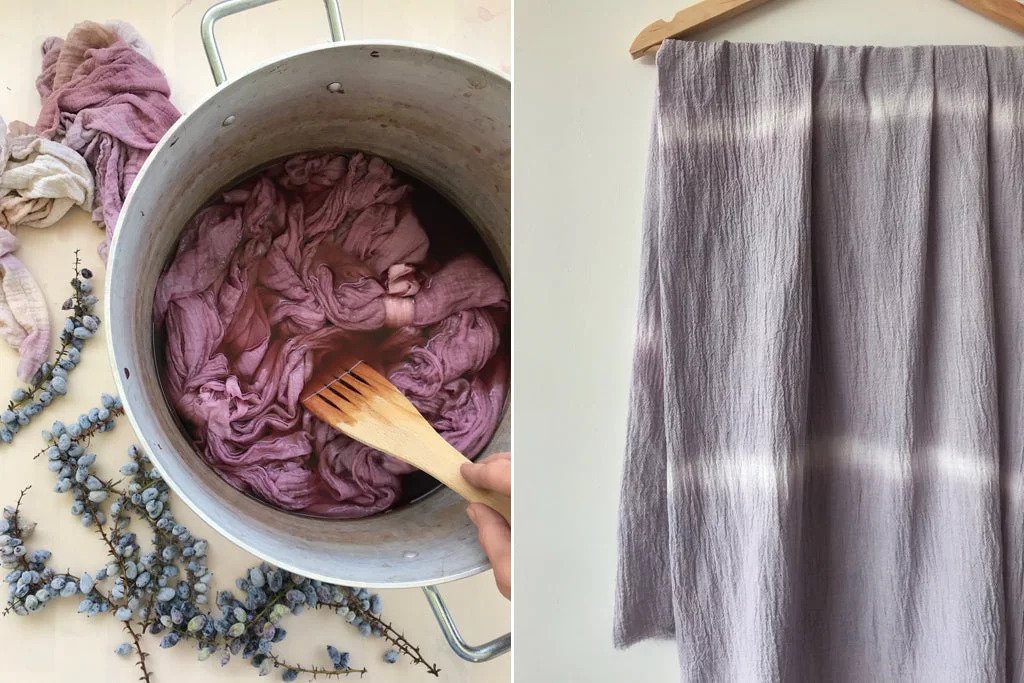
1 – Choose Your Fabrics
First, find something suitable for dyeing. I would suggest starting with fabric scraps or buying a roll – even something small like napkins or towels.
This will help you test a few colors before dyeing the items you actually want to wear or use at home.
The main requirement is that your fabric must be natural and pure. It’s important to choose a pure fiber, such as cotton or linen, rather than a mixed or synthetic material, as these won’t take the dye well.
Also, make sure the fabric is in its natural color and hasn’t been treated, bleached, or pre-dyed – the first time I used unbleached cotton muslin.
2 – Choose Your Colors
Next, choose plant-based dye sources, which can be fruits, vegetables, roots, spices, or flowers rich in tannins.
Some favorites: coffee or tea (for brown shades), berries, beets, cherries, or red wine (for purples, blues, deep reds), avocado pits (for light pinks), turmeric (for yellow/orange tones), and matcha or spirulina (for green).
3 – Prepare the Fabric
The first step is to treat the fabric with a mordant. A mordant essentially ensures that the dye bonds to the fabric.
There are many materials you can use, but in my research, I found soy milk worked best. It’s also easy to find and inexpensive. Avoid synthetic mordants – they can affect the fabric, may be irritating or toxic, and when discarded, can harm the environment. It’s always best to use 100% natural ingredients.
Simply pour some soy milk into a large bowl and dilute with water. There doesn’t seem to be a strict ratio, so I experimented. My first try had a higher soy milk concentration, and my second was more diluted – both worked equally well.
For example, I used about one-third to half a carton of soy milk topped up with water. Add as much fabric as fits comfortably in the bowl, ensuring the liquid covers it completely.
Stir to mix and leave the fabric to soak overnight or longer, around 12–20 hours.
The next day, rinse the fabric thoroughly and let it dry while you prepare the dye.
4 – Make the Dye
Now for the fun part. To make the dye, simply put your chosen ingredients into separate medium/large stainless steel pots. I usually make two colors at a time so it’s manageable, and I recommend doing the same. Add enough water to cover your fabric completely.
The more ingredients you use, the richer the color will be. For lighter results, use fewer ingredients and dilute with more water.
As a guide, you can use about:
150 g of ground coffee
20–30 g of ground or fresh turmeric
200 g of frozen or fresh berries
2–4 large avocado pits
or about a handful of whatever else you’d like to try.
Once your ingredients and water are combined in the pot, bring them to a boil for 10–20 minutes, then reduce the heat and simmer on low to medium heat for about 1 hour.
5 – Dye the Fabric
Strain out the ingredients and pour the dye into a clean bowl or pot. Then it’s time to add your fabric. Carefully submerge the fabric in each dye bath, making sure it’s fully covered.
Leave the fabric to soak overnight or longer. My first batch soaked for about 24 hours, my second for two days – both worked well. The longer you leave it, the deeper and stronger the color will be.
So, if you want a rich, vibrant purple or a bold, bright orange, leave it for an extra day.
6 – Final Steps
When the soaking is complete, rinse the fabric thoroughly to remove excess dye, then hang it to dry. Ideally, hang it outside in the shade or indoors away from direct sunlight.
Once dry – voilà! Your clothes look brand new, and you’ve made good use of leftover fruits and vegetables at home. Natural dyes are a simple, affordable way to refresh plain or faded clothes you might otherwise throw away. It’s a fun, rewarding process I’d recommend to everyone.